✦ CAPIWISE
Designing for the gap between wanting to invest and actually starting.
Most fintech apps assume the user already wants to trade. Capiwise started from the opposite assumption, that the people we were designing for had been wanting to invest for years and still hadn't opened an account. The interesting question wasn't how to make trading easier. It was why willingness keeps failing to convert into action, and whether a product could close that gap without pretending the gap doesn't exist.
role
Product Designer (UX/UI, Research, Strategy)
duration
2 weeks
industry
Fintech / Education
tools
Figma, FigJam, Chatgpt
WHAT IS IT ALL ABOUT
Some people want to start investing, but many never do. Not because they lack interest, but because the first step feels confusing, risky, and overwhelming.
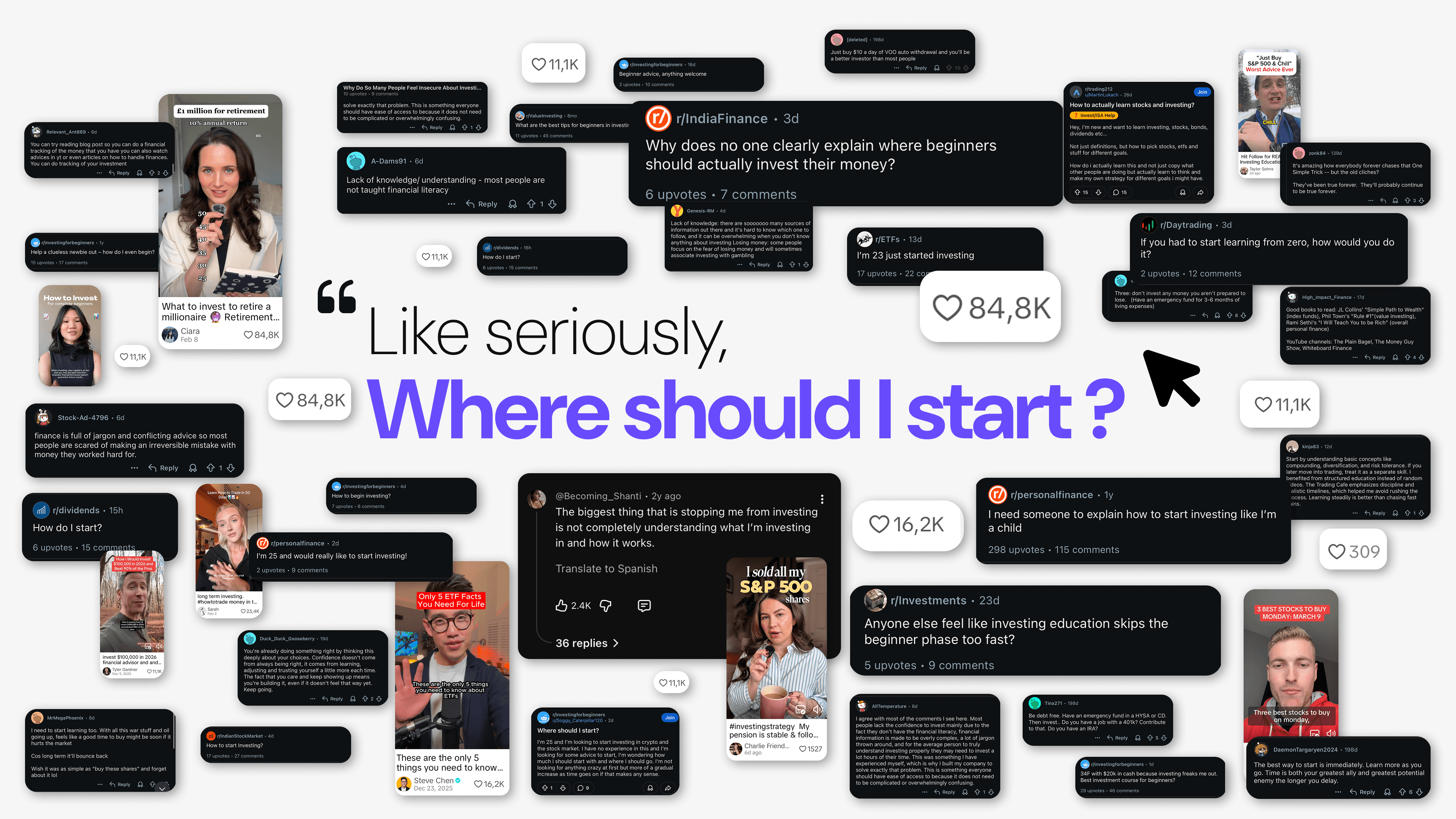
Scroll through Reddit, TikTok, or YouTube for five minutes and you'll find thousands of people asking the same question: "I want to invest, but I don't know where to start." That line kept coming up in our research, over and over, almost word for word. It became the anchor for everything we designed.
The challenge wasn't to build better trading tools. The challenge was closing the gap between interest and action.
ACCESS IS EASY,STARTING IS NOT.
COMPETITIVE LANDSCAPE
I also looked at where Capiwise could sit in the market. Competitors like Robinhood, eToro, and Betterment all offer investing platforms, but almost none offer structured education first. Most assume you already know what you're doing. That gap was the opportunity.
SECONDARY RESEARCH
We started where our users already were — social media. And what we found wasn't surprising, but it was telling.
Financial advice is everywhere online, but it's fragmented, contradictory, and often designed to entertain rather than educate. According to Motley Fool research, 91% of millennials and 100% of Gen Z turn to social media as a primary source for investment information — more than financial advisors or traditional media combined. The information exists. The problem is knowing what to trust.
USER INTERVIEWS
We ran interviews and surveys to dig deeper into the emotional barriers, not just the practical ones. Three patterns emerged clearly:
70% of survey respondents said not understanding how investing works was their biggest barrier to starting, not lack of money, not lack of interest.
5 out of 6 interviewees said they were curious about investing but blocked by fear of making mistakes with real money.
84K likes on a single TikTok promoting contradictory financial advice, viral reach without any credibility filter.
WRONG PROBLEM. RIGHT PIVOT.
If beginners don't lack motivation but lack confidence, then the product shouldn't start with trading tools. It should start with learning.
This reframe changed what the product actually was. Not an investing app with a learning tab, but a learning product that earns the right to become an investing app. The order matters, because it changes everything downstream, onboarding, monetization, even the visual language.
TESTED. BROKE. FIXED. REPEAT.
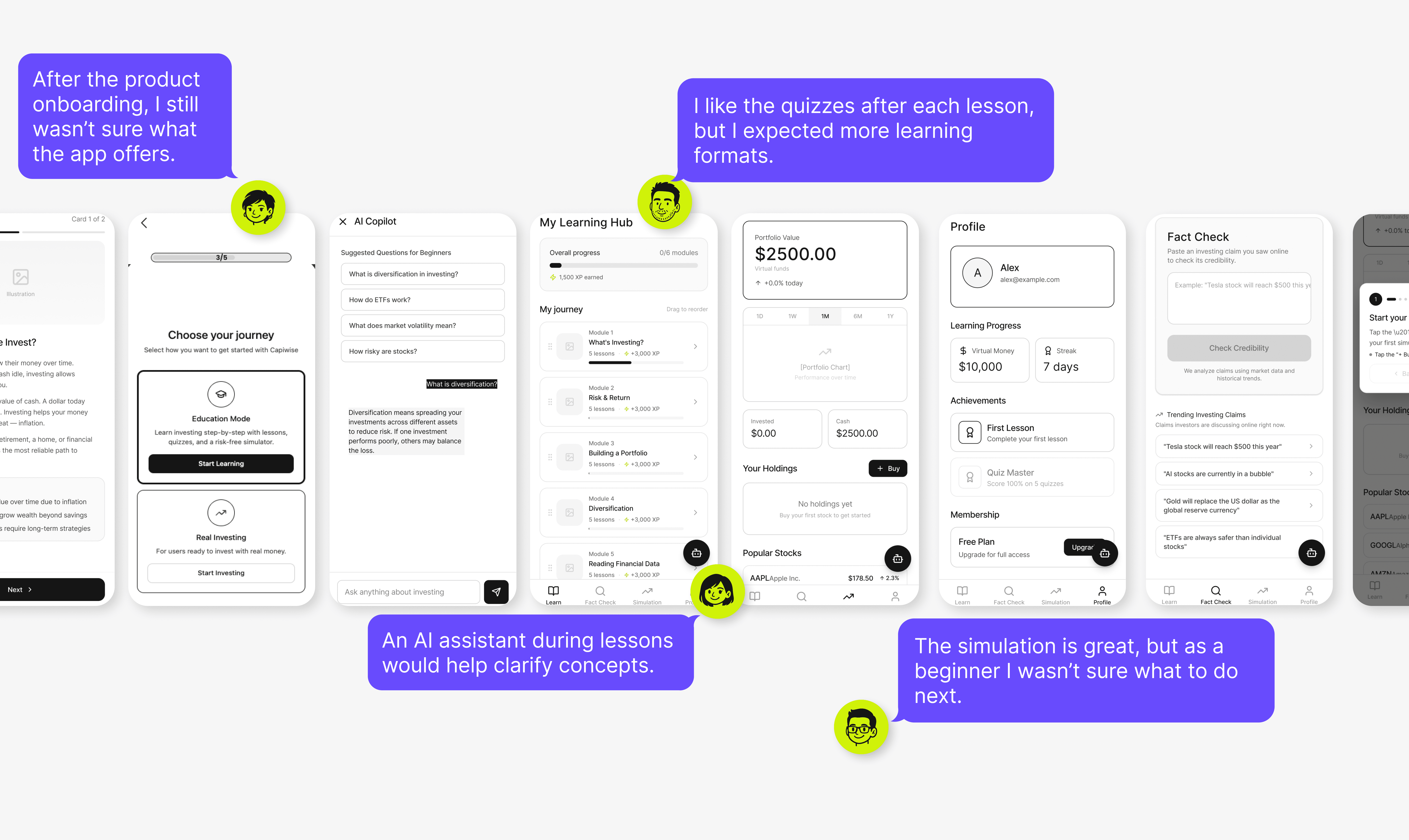
We ran concept and usability testing with mid-fidelity prototypes to validate both the idea and the execution. The feedback was honest and useful:
Users loved the quizzes after each lesson — but expected more varied learning formats. The simulation worked well in principle, but beginners weren't sure what to do once they arrived there. The Reality Check credibility score landed well, but the explanation felt too long.
Each piece of feedback pointed to the same underlying issue: clarity of next step. I had solved the emotional problem (fear, confusion, distrust) but left some gaps in the navigational logic — what do I do now?
So I fixed the navigation, not the concept. The simulation got guided prompts suggesting a first action. Reality Check got a collapsible detail view so the score landed fast and the explanation was there if you wanted it. And the Learning Hub got an in-context AI co-pilot, so "but what does that actually mean?" didn't require leaving the lesson.
LEARN IT. CHECK IT. PRACTICE IT.
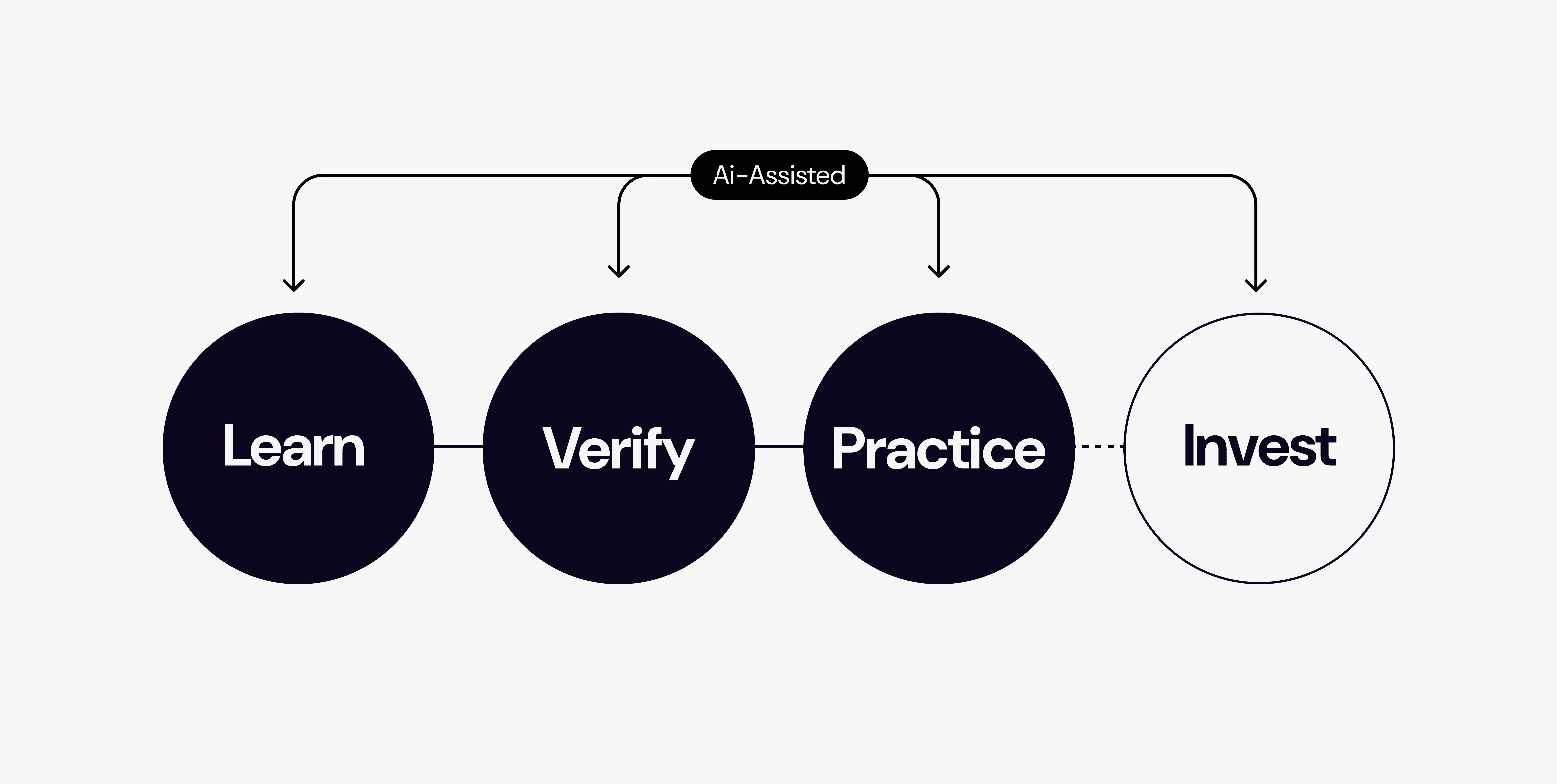
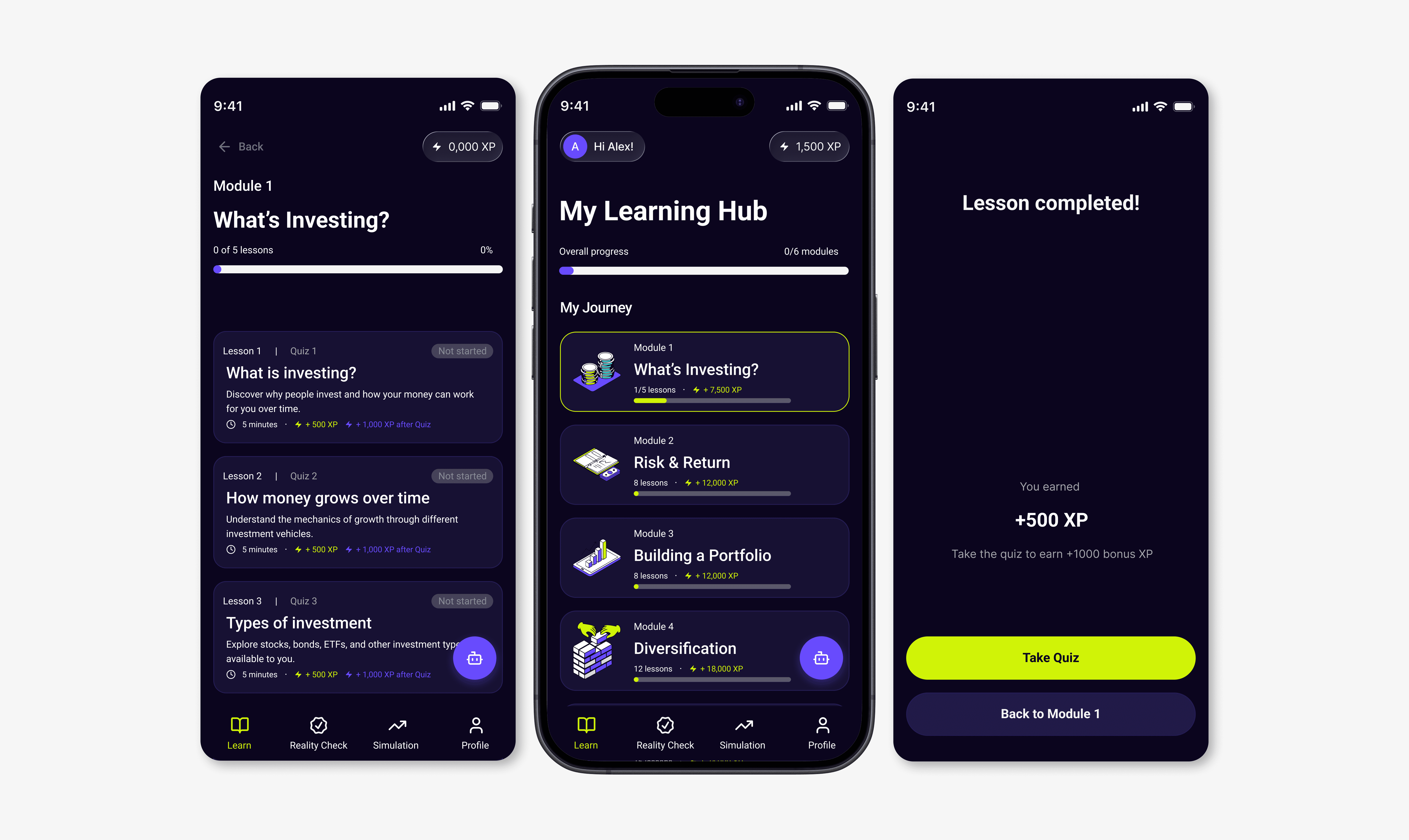
Thus we structured the MVP around three core pillars, each addressing a specific barrier we found in research:
| LEARNING HUB — A short, structured modules that explain investing basics in plain language. Users progress through concepts like risk, diversification, and portfolio building before ever touching a real trade. Because 70% of people don't start because they don't understand — we made understanding the first product.
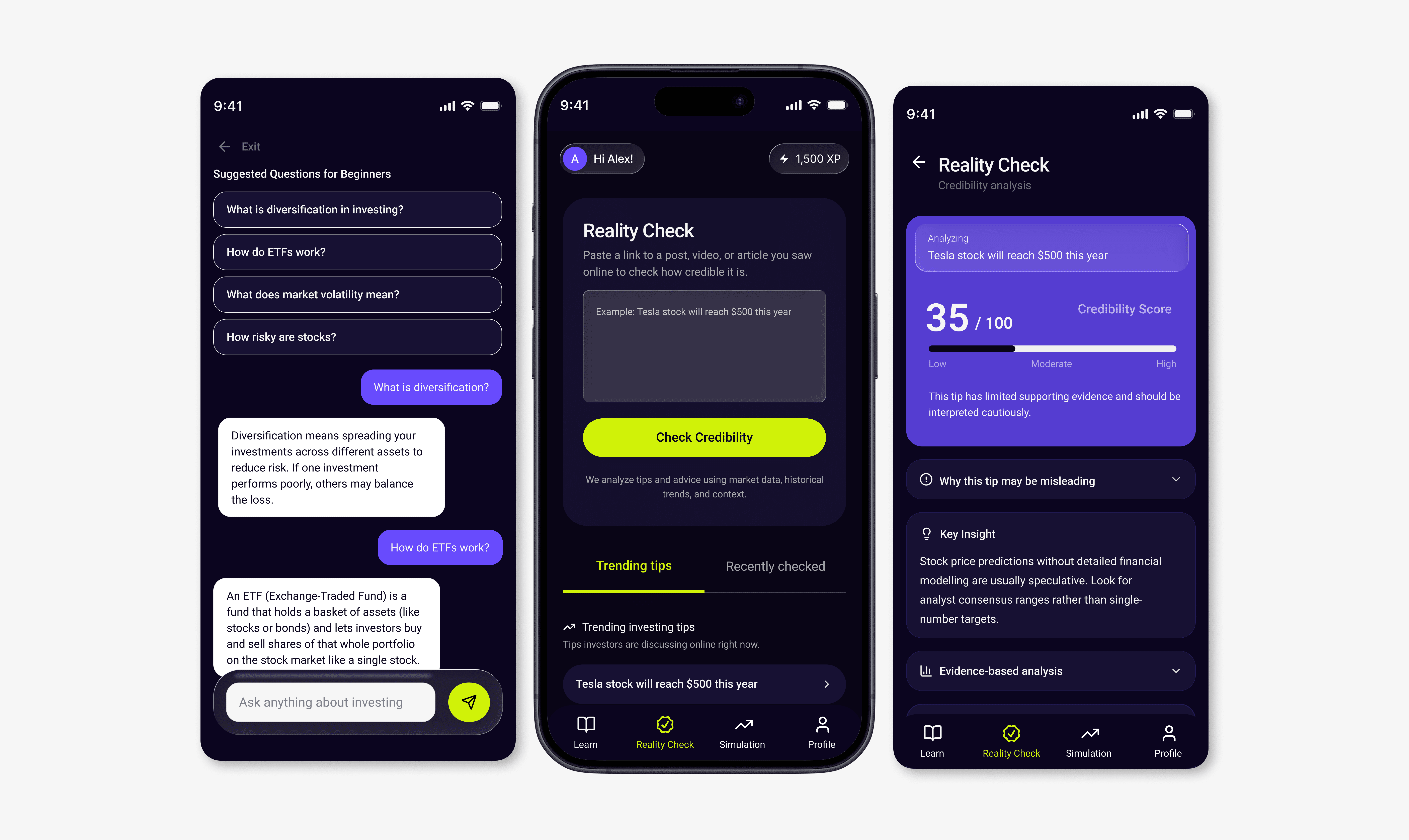
| REALITY CHECK — A tool that lets users paste any financial claim they've seen online , a TikTok tip, a Reddit post, a YouTube prediction, and get an evidence-based credibility score back. The insight here was direct: users encounter financial advice at the moment of consumption, not later on a separate platform. Reality Check meets them there. Instead of telling people not to trust social media, I gave them a way to verify it themselves.
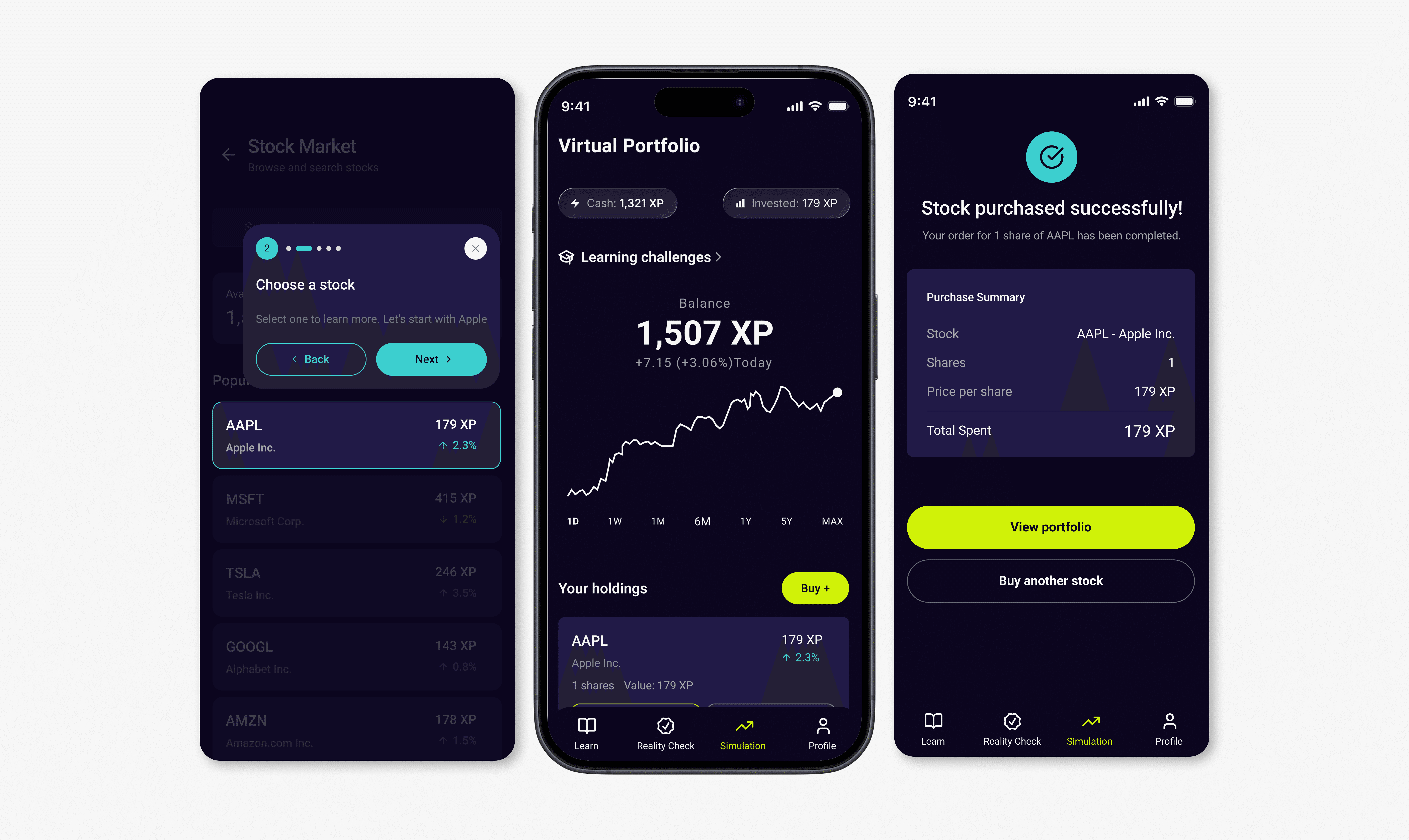
| SIMULATION SANDBOX — A safe environment to practice investing with virtual money before touching real funds. This directly addressed the fear of making mistakes that 5 out of 6 interviewees described. You can't build confidence without practice, and practice shouldn't cost you anything.
BUILT FOR THE one WHO SAID "NOT YET."
The final prototype was designed around one idea: confidence grows through practice.
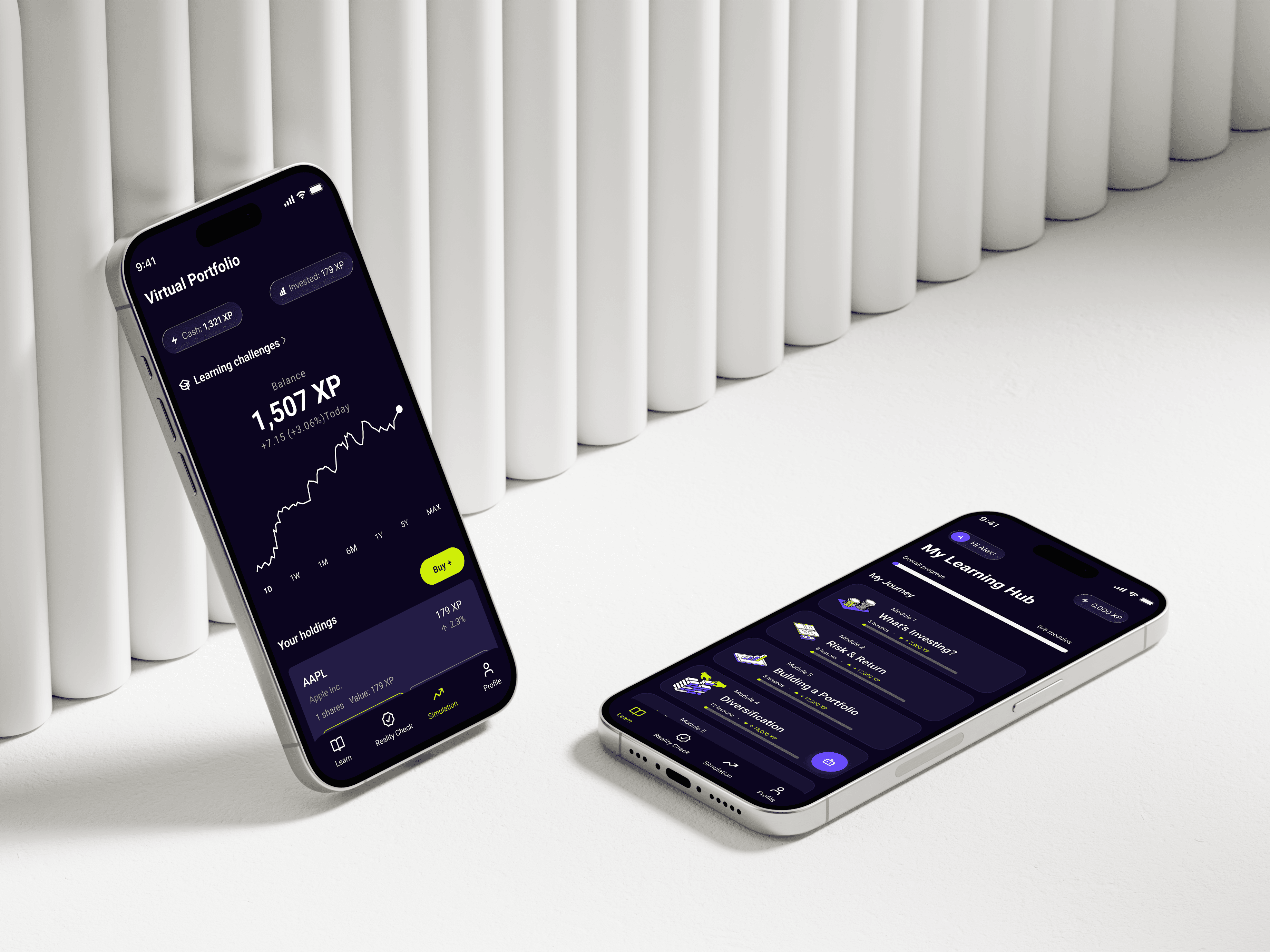
Users move through structured lessons, earn XP by completing quizzes, and turn those rewards into virtual money that can be used inside the Simulation Sandbox.This allows beginners to experiment, make mistakes, and learn without real financial risk.
A Reality Check tool stays available across the product to help users verify information before acting.
The visual style is dark and confident, intentionally different from typical fintech, because this product is built for people who never felt comfortable with investing.
REFLECTION
Capiwise was the project that taught me to question the brief. The original ask was an investing app. The right product was an education product that becomes an investing app later. That's a hard pivot to argue for, because it makes the MVP smaller and the timeline to revenue longer. But it's the version that survives contact with the actual user, the one who's been "going to start investing" for three years and still hasn't.
Designing for both US and GCC users also forced a lesson I'd resisted: there's no universal beginner. Financial literacy, regulatory comfort, even the social meaning of investing varies enormously. Flexibility wasn't a polish layer. It was a structural decision the product had to make in week one.